No. 1 (2010): Spanish Balkanologists
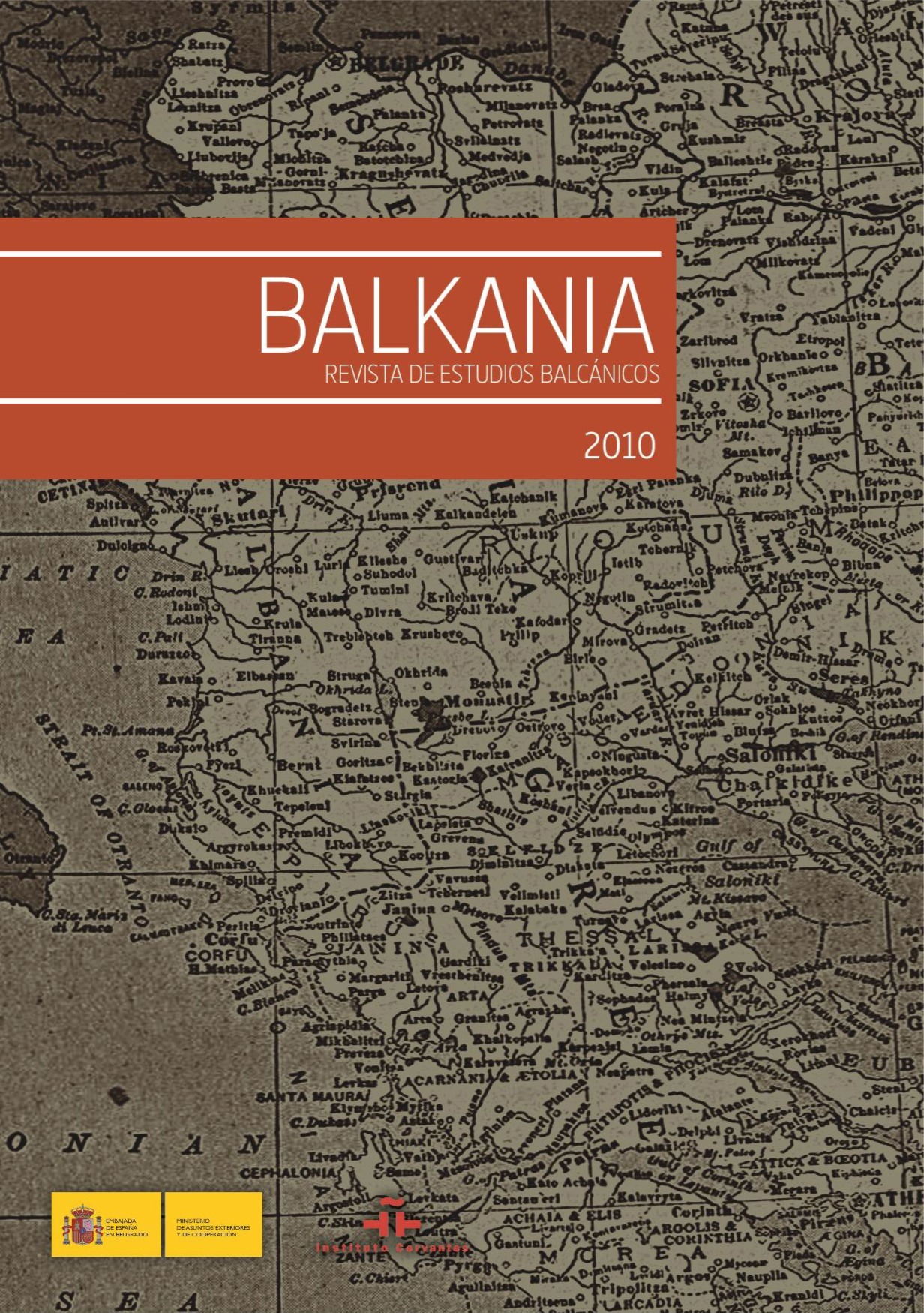
Balkania emerged several years ago at the initiative of the Spanish diplomat Javier Hergueta, an expert knowledgeable about the political-economic reality of the region. In his third professional stay in the Balkans, he wanted to once again promote a project from which, on this occasion, the Spanish academic world and all of us who in some way have some professional and personal link with Southeast Europe benefit.
Balkania seeks to contribute to the dissemination of a subject of study that still has much to discover. The Balkans generate a whole series of political, economic and social dynamics, unknown to the general public and which, despite their specificities, are part of European space and culture. Balkania, in addition to delving into the complexity of the political-social phenomena that unfold in the region, has an integrative vocation in a double sense: to develop studies that, through rigor, bring the Balkans closer to the academic world and the interested public in general, and open a meeting space that encourages interest in carrying out these studies and disseminating them for the benefit of its own participants.
Balkania in its second journey was born with many uncertainties, the result of the experience of this type of initiatives on previous occasions. However, it is ambitious in its aspirations. It hopes to meet the quality criteria that the reader deserves, and with enough experience to reach the occasion when, due to its continuity, it can be a reference journal among the academic community. With this desire we seek to generate an engine of optimism that I hope will be shared by all of us who are interested in the Balkans and without which this project would not be able to move forward with a future perspective.
It is for this reason that some of the people who participate in the enthusiasm of this new journey have been encouraged to participate voluntarily to give meaning to the project. Francisco Veiga, Carlos Flores, Ruth Ferrero-Turrión, Arturo Esteban, Fermín Córdoba, Mikel Córdoba, Virtuts Samchó, Gorka Niubó, Antonio Moneo, Ignacio Castro and the one who writes this introductory letter, have prepared a whole series of articles in which they have put all his academic efforts at the service of the reader.
Finally, I want to give my infinite gratitude to the Spanish Embassy in Belgrade, and to its ambassador Iñigo de Palacio, as well as to the II Head of the Embassy, Javier Hergueta, for their leadership and decision at the time of making the project a reality. I would like to convey my gratitude to the Cervantes Institute of Belgrade, in the person of its director, Antonio Lázaro Gozalo, and to the Spanish Agency for International Development Cooperation, an organization that has made my stay in Belgrade possible in the best conditions. And, last but not least, to the participants in Balkania for their contribution, support and dedication to the magazine, which have made the project even more exciting.
Miguel Rodríguez Andreu
Balkania editor-in-chief