No. 3 (2012): Transitions in Southeast Europe
The history of a region like Southeast Europe can be approached from very different perspectives. What the journalistic chronicle can interpret as a key day, a key episode or a key decision, time dilutes, turning it into another inconsequential chapter of complex and uncertain historical processes that do not know where they will end.
The concept of long duration (longue durèe) is a concept developed by the "Annal Current", which was coined by the historian Fernand Braudel. Starting from the axiom that time does not stop, the historian understood that longue durèe is the time of structures that last over time, in relation to others that are temporary or that belong to limited political, economic and social cycles of a certain genealogy.
When the Yugoslav Civil Wars ended, an objective for the region was on the horizon: for the former Yugoslav republics to be members of the EU and thereby neutralize the regional tensions inherited from the conflict. The majority of the affected population agreed with this. However, the years have passed and, with the exception of Slovenia and Croatia, the future is not completely clear in this regard. The citizens of Serbia, Bosnia and Herzegovina, Montenegro and Macedonia are aware that time is ticking, and what, after the Yugoslav fragmentation, seemed like the key to access a hopeful future has become a long journey whose end is unknown. The announcements of favorable opinions from Brussels, the optimistic statements with a European perspective, and the deadlines set to achieve effective integration, are increasingly receiving skeptical glances from the local population who at the same time are aware that the European Union does not pass currently at its best moment in the midst of the economic crisis.Time will determine whether the European integration process has a greater impact on local political culture than the fragmentation of Yugoslavia and the subsequent conflict already has.
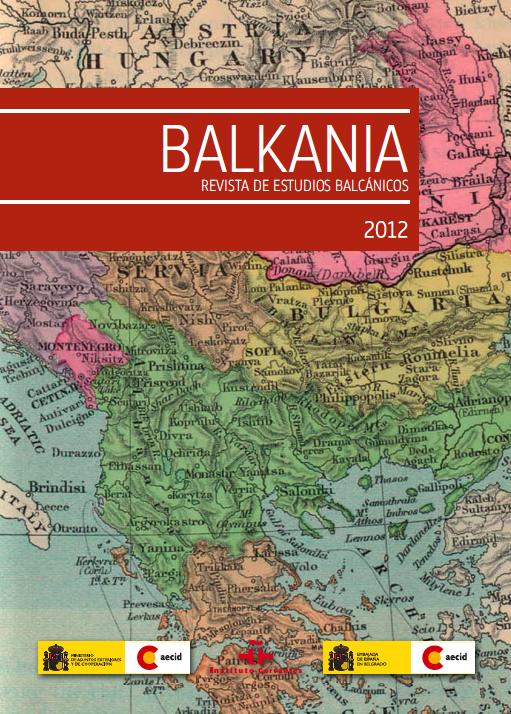
Balkania in its new issue faces the uncertain territories of a regional transition that is oriented towards Brussels but that must in any case bear the weight of its recent history. The first two articles of Balkania address this question, in the parallel, but not identical, cases of Serbia and Croatia. The European integration process has shown that each country requires a specific reading of its characteristics and peculiarities. Both articles offer us a comprehensive analysis of all its keys to understand how this integration process has developed (Croatia) - through Constantino Longares - and how it is developing (Serbia) - through Pablo Rupérez and Mercedes Millán.
The right of restitution and return of the displaced in the cases of Kosovo and Bosnia and Herzegovina—addressed by Mikel Córdoba and Fermín Córdoba—and the situation in the Brčko District—addressed by César Pacheco—are two graphic examples of a transition that It is not free of questions from the effects of the conflict itself to the present reality more than 20 years after the end of the Yugoslav Civil Wars. Both articles offer a conscientious analysis of the difficulties involved in returning to normality after enormously bloody conflicts with thousands of people affected, where the international community has had to face its difficult management.
The effects of war not only translate into changes in physical structures, but also psychological ones, as a consequence of the assimilation of an enormously turbulent political itinerary. In the present, the inherited historical memories, the national narratives of the Yugoslav conflict—both addressed by Ruíz Jiménez—intersect with the selection strategies of the national memory that are made in a country like Serbia, involved in a double process, and sometimes contradictory, of national construction and of promotion of the values associated with European integration—addressed by Gordana Đerić—.
Only the passage of time will give us an accurate perspective on the impact that each political event had and also on its subsequent significance (longue durèe), but it seems obligatory to assume that the jump from the Yugoslav conflict to European integration requires an analytical background. deeper than what is presented to us with the current chronicle. For this reason, Balkania dedicates this issue to the diffuse territories of a political transition that offers a multitude of elements of analysis and that reveals both continuities and ruptures since the time of Yugoslavia.
Balkania renews its commitment to in-depth analysis with the study of crucial aspects of regional reality, and the publication of this issue is good proof of this. The magazine maintains its own continuity with the increase in its dissemination in institutions, research centers, universities and public libraries, with a greater presence both internationally and regionally in Southeast Europe, as well as in Spain, where it was held in Madrid in June in 2012 an event to promote the magazine. The event, organized by the European Commission and the Serbian Embassy in Spain, was attended by the ambassadors of Croatia, Bosnia and Herzegovina, Romania, Malta, as well as diplomatic representatives from other Southeast European countries. The magazine was presented by ambassador Javier Hergueta, historian Francisco Veiga, political scientist Ruth Ferrero-Turrión, and the author of this editorial, and various issues concerning the magazine were discussed at the event.
During the last year the magazine has also had a greater media presence, having been mentioned on several occasions in widely followed media outlets such as RTVE or social networks linked to Balkan news (www.casabalcanes.com; www.balkanidades.com ; www.eurasianhub.es; www. eurasianet.es), with which a trajectory can already be recognized within Balkan studies in Spanish. Furthermore, in this edition we have decided to translate the articles into Serbian in such a way that we reach a greater number of readers in Southeast Europe.
Miguel Rodríguez Andreu
Balkania Editor-in-chief