No. 5 (2014): The business environment in Serbia and Western Balkans
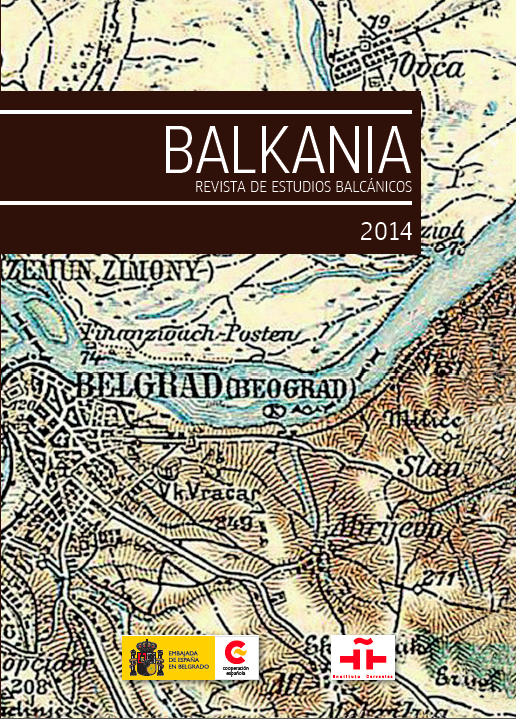
Since the economic crisis began, the fundamental concern for the majority of the continent's citizens has been focused on the Eurozone. The very negative impact that the crisis had on countries such as Greece, Spain or Portugal focused attention on the national policies of the Member States and on the measures adopted from Brussels or the European Central Bank. On the other hand, the borders of the European Union have the psychological effect of encouraging forgetting what happens outside them, although in perspective candidate countries such as Serbia, Macedonia, Albania or Montenegro are in question, whose main trading partner is the EU itself.
The economic crisis is a constant in the economic life of the region since the fragmentation of Yugoslavia. The countries of the region have to undertake many reforms linked to their status as former socialist countries, but also to their status as future members of the EU. The fact that enlargement is not a priority at the moment for the EU chancelleries, and that these countries have to encourage local economic activity, makes the situation by no means easy: high levels of unemployment, need for Legislative reforms, rationalization of bureaucratic procedures, fight against corruption or strengthening of judicial guarantees are challenges in systems that withstood the impact of the transition towards a market society, but that are stagnant to address the challenges of the current economy due to lack of political will, due to the immediate costs of said reforms (social and electoral) or due to the simple entrenchment of the socio-economic habits of previous periods.
With the aim of taking the pulse of the current economic situation, Balkania has turned to different specialists to illustrate what difficulties investors encounter, with the idea of drawing a general landscape of business in Serbia and the region in general. Siniša Zarić in her contribution includes the most common demands among foreign investors in Serbia, as well as an interesting comparison using economic indicators on the degree of competitiveness of the Balkan country in relation to countries such as Croatia, the Czech Republic or Bulgaria, which have undergone major transformations. economics since its socialist or Soviet stage. His conclusions highlight the importance of the rule of law as a relevant variable to create a stimulating investment context.
Marko Malović and Duško Bodroža question the development strategy dependent on Foreign Direct Investment (FDI) in Serbia, based on a complex scenario where “the consequences caused by privatizations are numerous and are reflected in the balance of payments deficit, in high unemployment, in poor export performance, in the high rate of inflation and in the instability of the exchange rate.” The authors collect what misconceptions are about how FDI can confront this economic situation.
Renewable energies have emerged as a key sector in terms of investments, but also as a necessary sector from an ecological point of view. José María Gómez raises the problems of investment in this sector but also its possibilities taking into account more consolidated experiences: “The Balkans do not represent a region with significant levels of energy production and constitute mostly small energy markets. Far from being a disadvantage, in the long run it could be a positive factor, allowing us to avoid the mistakes made in the past by more developed energy markets.” In perspective is making profitable a sector with a great future but also one that faces various political, legal and economic obstacles.
The agroeconomic sector in Serbia will be one of those that will undergo the most changes in the short term, in other reasons, given the evident need to progressively adapt the agrarian and rural policy with the EU policy in the common market. On this issue, Nenad Ilić argues that: “The absence of adaptive development could cause unfavorable effects that would be reflected in the decrease in the rural population, in the high unemployment rate and in the increasingly high rate of old age of the rural population.” . In this context he maintains that agricultural cooperatives should be encouraged gradually.
Veran Stanćetic focuses the problems derived from the slowness of the system, inadequate laws or their non-implementation “on the inefficiency in the organization of the public sector – weak institutions and low quality of public administration (poor governance). In short, it is about the (ir)responsibility and inefficiency of the political elite.” Given which the author indicates the possible and desirable paths of reforms that must be implemented to stimulate more intense economic development.
Croatia's departure from CEFTA with its entry into the European Union affects the type of economic relations that countries in Southeast Europe have, generating new possibilities for exchange between the current members of the agreement. Rade Škorić maintains that "it is to be hoped that Serbian producers will know how to take advantage of this new situation and the preferences they have in their exchange with the CEFTA countries, compared to Croatia whose products are subject to customs duties."
Finally, from my position as director of the magazine, I would like to express my gratitude to the authors of the articles, to the Spanish Embassy in Belgrade, and, especially to the translators Marija Minić and Dragana Štrbac, and to the Economic and Commercial, in the person of its boss Aitor Mate, for the help shown and for the enthusiasm with which we have all faced this project, which will be reflected as every year during the presentation of the magazine at the Cervantes Institute in Belgrade. We hope that the work carried out in Balkania n“ 5 (2014) will serve to bring Southeast Europe closer to the European economies and the Spanish economy in particular. May this edition be, as it has been until now, an interesting publication for the public sector and the private sector, both in business and in the academic world.
Miguel Rodríguez Andreu
Balkania Editor-in-chief